
Using the tram in Amsterdam is one of the simplest ways to get around the city. For many visitors, it is the easiest public transport option to understand from day one. The network reaches the centre, the museum district, shopping streets, residential neighbourhoods and several of the places you are most likely to visit during a short city break. If you want a practical, low-stress way to move between major sights without relying on taxis or walking everywhere, the tram is often the best choice.
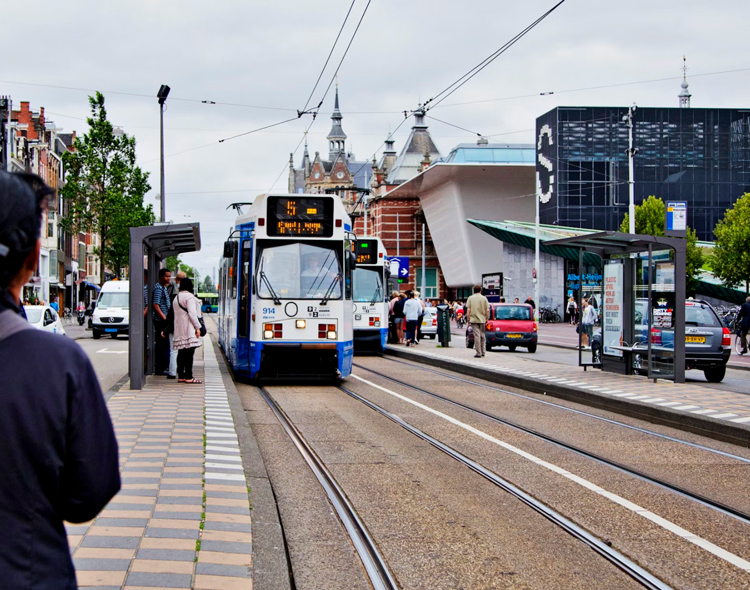
Why the tram is such a good way to explore Amsterdam
Amsterdam is compact, but it is not always as small as it looks on a map. Walking is great for the canal belt and the historic centre, yet distances quickly add up once you start combining neighbourhoods, museums, markets and dinner plans in one day. That is where the tram really helps. It is fast enough to save time, frequent enough that you usually do not need to overthink every journey, and simple enough for first-time visitors to use with confidence.
The tram is especially handy if you are travelling between Amsterdam Central Station and places such as Museumplein, Leidseplein, De Pijp, Jordaan, the Foodhallen area, Amsterdam Zuid or other neighbourhoods just outside the busiest core. In many cases it drops you closer to your destination than the metro would. It also lets you see the city as you go, which is part of the appeal. You are not disappearing underground for most of the ride. Instead, you pass canals, terraces, bridges, elegant townhouses and everyday city life.
For visitors staying only a few days, that combination of convenience and atmosphere is hard to beat. You are not just getting from A to B. You are also seeing more of Amsterdam along the way.
How Amsterdam’s tram network works
The tram system is operated by GVB, the main public transport company in Amsterdam. Trams run on fixed routes and stop at clearly marked tram stops throughout the city. At the stop, electronic displays usually show line numbers, destination names and live departure times, which makes it much easier to work out whether you are waiting in the right place.
Many tram routes pass through or start near Amsterdam Central Station, which is useful if you are arriving by train or staying nearby. Outside Central Station, there are multiple tram platforms, so always check the line number and final destination before boarding. In Amsterdam, the destination shown on the front and side of the tram matters just as much as the tram number.
Once you understand that basic system, using the network becomes straightforward. You look for your tram line, check the direction, wait at the marked stop, board through the door that opens, and check in as you enter. For most visitors, that is all there is to it.
Where the tram is most useful for visitors
The tram is not necessarily the answer for every journey, but it is ideal for many of the journeys tourists actually make. If you are heading from Central Station to Museumplein, travelling between the canal belt and De Pijp, or moving from one busy central district to another, the tram often feels more direct and more intuitive than other options.
It is also a good choice when the weather is not on your side. Amsterdam is a brilliant walking city, but wind and rain can make a long walk much less appealing than it seemed in the morning. A short tram ride can save both time and energy, especially if you are carrying shopping, travelling with children, or trying to fit a lot into one day.
For many travellers, the smartest approach is to combine walking and trams. Walk when you are exploring one neighbourhood slowly, and use the tram to bridge the longer stretches between areas. That way you keep the city feeling accessible without exhausting yourself.
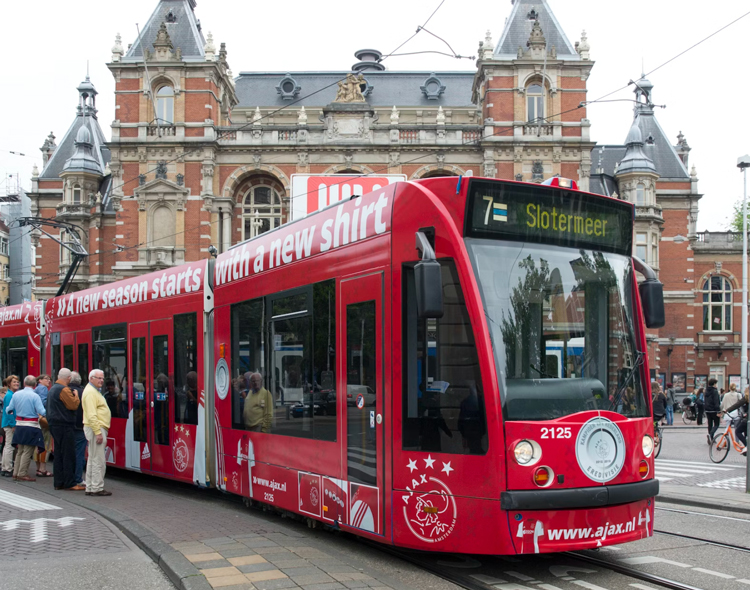
How to board and leave the tram
Using the tram is easy once you know the routine. Wait at the stop and let passengers leave first. When the doors open, step on board and check in straight away using your chosen payment method or travel ticket. Inside the tram, screens and announcements help you follow the route and prepare for your stop.
If you want to get off, press the stop button before the tram reaches your stop. Do not leave it until the last second. The request button is clearly marked and is easy to find near the doors or seating areas. When the tram stops, exit calmly and remember to check out if your ticket or payment method requires it.
The most important thing is consistency. Use the same card, phone or device for both check-in and check-out. If you start with one payment method and try to finish with another, the system may not recognise your trip correctly.
Paying for the tram in Amsterdam
One of the biggest changes for visitors is that Amsterdam public transport is now much easier to pay for than it used to be. Public transport is cashless, and many travellers simply use contactless payment. That means you can check in and out with a contactless debit card, credit card, smartphone or wearable device instead of buying a traditional transport card first.
For a lot of short trips, this is the simplest option. You board, tap in, travel, and tap out when you leave. There is no need to top up a separate card in advance just for one or two tram journeys.
That said, contactless pay-as-you-go is not always the best value. If you know you will be making several journeys in one day, or if you prefer the certainty of unlimited travel, a day ticket or multi-day pass can work out better and feel more convenient. It depends on how you plan to move around.
Which ticket option suits your trip best
If you are mainly staying within Amsterdam and expect to use trams, buses and the metro regularly, a GVB day ticket or multi-day ticket is often the most practical choice. These tickets are designed for unlimited travel on the GVB network within the city, both during the day and at night. They are a good fit for classic city-break itineraries built around sightseeing, dining and moving between neighbourhoods.
If you are only taking one or two journeys, contactless payment may be enough. It keeps things simple and avoids buying more transport than you need.
If your plans go beyond Amsterdam itself, the decision changes. In that case, the Amsterdam & Region Travel Ticket can make much more sense. This ticket is aimed at visitors who want the freedom to travel in Amsterdam and also head out to places in the wider region without having to buy separate local and regional tickets.
In practical terms, this is the kind of pass that becomes useful if your itinerary includes day trips as well as city travel. If you want one transport product that covers your Amsterdam tram journeys and also supports wider regional travel, it is one of the better options to look at.
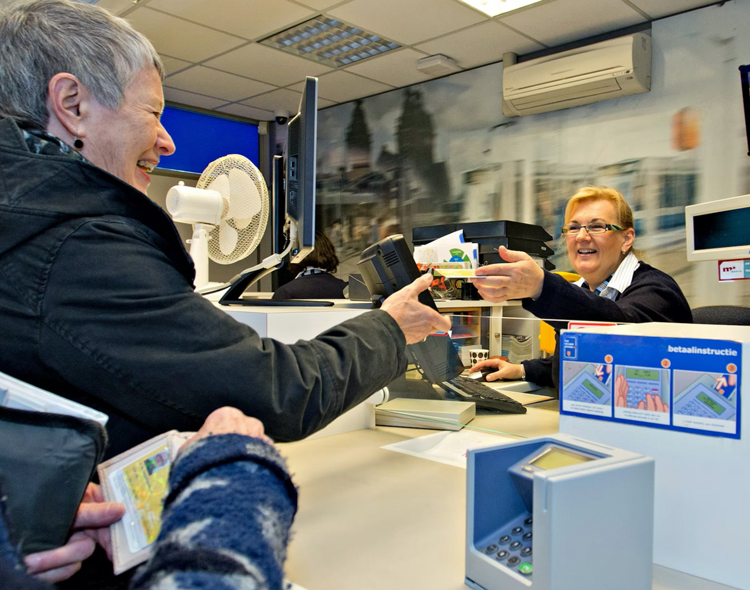
Amsterdam & Region Travel Ticket
If you want more than just city transport, the Amsterdam & Region Travel Ticket is worth considering. It is designed for travellers who want unlimited public transport in Amsterdam and the surrounding area for one, two or three consecutive days. That makes it particularly useful if your trip combines time in the city with visits to places outside the centre.
For example, this type of ticket is attractive if you are arriving via Schiphol, staying in Amsterdam, and also planning to visit places elsewhere in the region. Instead of juggling separate tickets for different operators, you have one product that covers a wider range of journeys. That can make the whole trip feel far smoother, especially if you are only in the Netherlands for a limited time.
It is also a straightforward option for travellers who do not want to think too much about fares, zones or operator differences. You can simply focus on where you want to go rather than how many separate tickets you need to buy first.
What this type of regional ticket is useful for
The main appeal is flexibility. You can use it for tram travel within Amsterdam, but also for wider public transport journeys in the Amsterdam region, including selected bus, metro and train connections depending on the route and operator. That makes it a handy choice for visitors who want to see more than the city centre and prefer not to buy transport one ride at a time.
As with any travel pass, it is important to follow the instructions linked to the specific ticket you book. Always check in and out at the start and end of each journey, and read the confirmation carefully so you know exactly how activation and collection work for your booking. The process is generally straightforward, but the details can vary slightly depending on the product format and where you buy it.
Order your Amsterdam & Region Travel Ticket here
Practical tram tips that make your trip easier
The easiest mistake to make is rushing. Give yourself a few extra seconds at the stop to read the display properly, confirm the destination, and check which side of the platform you need. That small pause avoids most of the confusion first-time visitors experience.
Another useful tip is to use the tram for medium-distance journeys rather than every tiny hop. In the historic centre, walking is often quicker once you factor in waiting time. The tram really comes into its own when the distance is a bit too far to walk comfortably but not far enough to justify a more complicated route.
Try to avoid blocking the doors, especially during busy periods. Amsterdam trams are heavily used by locals, not just tourists, and boarding tends to work best when everyone moves decisively. If the tram is crowded, take your backpack off your shoulders and keep it low so you are not taking up extra space.
If you are unsure where to change, use a live journey planner before you travel. Amsterdam’s public transport apps and stop displays are good, and real-time information is especially useful when there are engineering works, diversions or event-related changes.
When to use the tram and when not to
The tram is ideal for many visitor journeys, but not every one. If you are travelling only a few streets within the canal belt, walking is often more enjoyable. If you are heading to a destination best served by metro or train, another mode of transport may be faster. And if you are arriving with heavy luggage, the simplest route is not always the tram route, even if it looks direct on the map.
That is why the best approach is not to treat the tram as the only answer. Think of it as your default city transport for most sightseeing days, then switch when another mode clearly does the job better. In Amsterdam, public transport works best when you stay flexible.
Why many visitors end up preferring the tram
There is a reason so many travellers end up using the tram more than expected. It feels manageable. You can understand it quickly, it reaches the parts of the city people actually want to see, and it removes the hassle from moving around. On top of that, it adds something to the trip. Looking out from the window as the city rolls past is a far more pleasant experience than staring at a tunnel wall or spending money on repeated taxi rides.
For first-time visitors, it is often the transport mode that makes Amsterdam click. Once you realise how simple it is to get from your hotel to a museum, from a market to dinner, or from the canal belt to another neighbourhood, the city starts to feel much more open and easy to explore.
Final thoughts on taking the tram in Amsterdam
If you want a reliable, visitor-friendly way to get around Amsterdam, the tram is one of the best tools you have. It is easy to use, well connected, and practical for the kind of journeys most travellers make. For quick individual rides, contactless payment keeps things simple. For heavier sightseeing days, an unlimited city ticket can be better value. And if your plans include exploring outside the city as well, a regional travel pass can be the smarter choice.
Use the tram well and Amsterdam becomes easier, smoother and more enjoyable almost immediately. It helps you see more, waste less time and move around with the confidence of someone who already understands the city.