
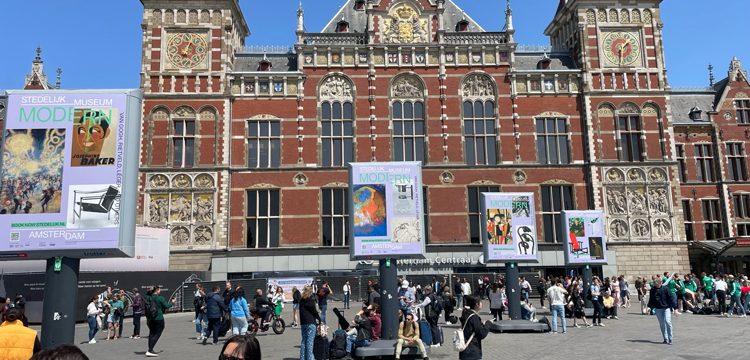
Amsterdam’s 750th anniversary was far more than a birthday party. It became a city-wide celebration of history, culture, neighbourhood identity and the future of the Dutch capital. For visitors, it offered a fresh way to understand Amsterdam beyond the canals, museums and postcard views. Across the city, local initiatives, major festivals, performances, exhibitions and public events brought together long-time residents, newcomers and travellers in one shared story: Amsterdam as a city that keeps changing, but never loses its character.
What made Amsterdam 750 especially memorable was its scale. This was not a single weekend or one headline event. It was a long-running programme that stretched across districts, institutions and communities. Some celebrations were large and spectacular, staged in iconic venues or on major public routes. Others were intimate, local and community-led. Together they showed what Amsterdam does best: mixing history with creativity, and big city energy with strong neighbourhood pride.

What Amsterdam 750 Celebrated
The anniversary marked the moment when Amsterdam looked back on its long history while also asking what kind of city it wants to be in the future. That balance ran through the entire programme. Heritage, migration, music, architecture, sport, street culture, food, public space and social change all had a place in the celebrations. Instead of presenting Amsterdam as a frozen historic centre, the anniversary programme made clear that the city is made up of many different stories, districts and communities.
That wider view mattered. Tourists often know Amsterdam through a handful of famous sights, but the anniversary encouraged people to explore further. Areas outside the city centre stepped into the spotlight, and neighbourhoods that do not always appear in classic guidebooks became part of the conversation. For visitors willing to look beyond the busiest canals, that was one of the most rewarding parts of the entire programme.
The Opening Concert at the Ziggo Dome
One of the defining moments of Amsterdam 750 was the opening concert at the Ziggo Dome. It set the tone for the anniversary with a large-scale musical and visual tribute to the city. Rather than treating Amsterdam’s history as something distant or formal, the show brought it to life through a mix of styles, moods and generations. Classical influences, contemporary pop, dance, gospel and urban sounds came together in a performance that reflected the city’s diversity.
The concert worked because it felt recognisably Amsterdam: ambitious, eclectic and open to different voices. It was not just a polished stage show, but a cultural statement. Amsterdam’s story was presented as something built by many people and many traditions, not by a single image or era. For visitors following the anniversary celebrations, this event became one of the clearest examples of how the city wanted to frame its milestone year.
Festival on the Ring A10
If one event captured the scale and imagination of Amsterdam 750, it was the festival on the Ring A10. Turning part of the city’s ring road into a car-free celebration space was a bold move, and exactly the sort of idea that made the anniversary stand out. Instead of traffic and routine, visitors found a long stretch filled with performances, sport, music, food and public programming.
That contrast was part of the appeal. A road usually associated with movement and congestion became a temporary place to meet, pause and celebrate. It was symbolic as well as practical. Amsterdam used one of its most recognisable urban spaces to show that public life can be shaped differently, even if only for a day. For tourists, it offered a rare chance to experience the city in a way that ordinary travel simply cannot replicate.
The atmosphere was broad and welcoming rather than exclusive. Families, local residents, day-trippers and international visitors could all take part. That accessibility helped make the event one of the most talked-about highlights of the anniversary programme.

The 24H Series Showed a Different Amsterdam
Among the most useful parts of Amsterdam 750 for curious travellers was the expanded 24H series. These district-focused events encouraged people to explore one part of the city in depth through a packed day of activities, workshops, performances and local discoveries. Instead of moving quickly from one major attraction to another, visitors could spend real time in a neighbourhood and get a better sense of its identity.
This format worked especially well because it matched the way many people now want to travel. Rather than ticking off landmarks, they want to understand the rhythm of a place. In Amsterdam, that means seeing how different one district feels from another. West has a different texture from Oost, Nieuw-West has a different story from the canal belt, and Zuidoost brings a very different energy again. The 24H events made those contrasts visible and enjoyable.
Food, music, local history and community spaces all played a role. Some programmes were highly cultural, others more playful or family-focused, but the overall effect was the same: they reminded visitors that Amsterdam is not one single experience. It is a collection of places, backgrounds and ways of living that sit alongside one another.
Big Public Events Gained Extra Meaning
Another strength of Amsterdam 750 was the way it connected with existing city events that already have strong local meaning. Celebrations linked to major public favourites, including maritime festivities, neighbourhood festivals and city sport, gave the anniversary a wider reach. Rather than creating a completely separate programme from scratch, Amsterdam folded its milestone year into events that people already loved.
That made the anniversary feel lived-in instead of staged. Visitors could experience the city at its most celebratory while also seeing traditions that are already part of Amsterdam’s cultural fabric. Maritime heritage, summer festivals, public running events and neighbourhood gatherings all gained an added layer through the anniversary lens. The result was a programme that felt both festive and authentic.
This also helped spread activity across different audiences. Not everyone travels to Amsterdam for museums or nightlife. Some come for culture, some for sport, some for local food, some for festivals, and some simply want to experience the city at a livelier moment than usual. Amsterdam 750 gave all of those travellers a reason to look again.
Why the Anniversary Mattered Beyond Tourism
It would be easy to treat Amsterdam 750 as a marketing moment, but that would miss the point. The programme mattered because it invested in civic identity as much as visitor appeal. The city used the anniversary to support local initiatives, highlight untold stories and involve communities that do not always get centre stage in tourism campaigns. That gave the celebrations more depth and more credibility.
For travellers, that matters too. The best city anniversaries are not just polished spectacles created for outsiders. They work because local people care about them. Amsterdam 750 had that stronger foundation. It was rooted in neighbourhood participation, cultural organisations, schools, archives, music, public institutions and community projects. That is why it felt richer than a standard events calendar.
It also made room for reflection. Amsterdam is a city people love, but it is also a city that debates itself constantly. Housing, tourism pressure, public space, equality and urban change are all part of everyday conversation. The anniversary did not erase those realities. In many ways, it used them as part of the story, asking what should be preserved, what should change and what kind of city Amsterdam wants to remain.
What Visitors Can Still Take From Amsterdam 750
Although the main anniversary programme has finished, the spirit of Amsterdam 750 still offers plenty of value for visitors. The clearest legacy is not one single monument or installation, but a broader way of exploring the city. If the celebrations proved anything, it is that Amsterdam is best understood by combining the famous with the less obvious.
That means pairing central landmarks with district exploration. Visit the historic heart, but also make time for neighbourhoods beyond it. Explore archives, local museums, markets, cultural venues and community-led spaces. Look for places where Amsterdam’s story is still being told in the present tense, not only preserved behind glass. The anniversary helped underline that the city’s identity lives just as much in contemporary culture and local routines as it does in its famous Golden Age past.
Travellers interested in the roots of the city can also use the anniversary as a starting point for exploring Amsterdam’s earliest history. The story of the city’s origins, the importance of the old trading routes and the role of the document that first mentioned Amsterdam all remain central to understanding how a small settlement became one of Europe’s most visited capitals. The anniversary brought renewed attention to those foundations, and that interest continues to shape exhibitions, storytelling projects and city history programming.
How to Experience the Legacy of Amsterdam 750 Today
The best way to follow the legacy of Amsterdam 750 is to treat the city as layered rather than linear. Start with the places that explain the origins of Amsterdam, then move into the districts that reveal how the city has expanded and changed. Seek out live music, local food, neighbourhood culture and public space, because those were all central to the anniversary mood.
If you are planning a trip and want to understand Amsterdam more deeply, do not focus only on the busiest attractions. Build time into your visit to wander outside the obvious core, use ferries and trams to see how different parts of the city connect, and pay attention to the contrast between old and new. That contrast is not a side note in Amsterdam; it is one of the city’s defining characteristics.
In that sense, Amsterdam 750 succeeded. It celebrated a major historic milestone, but it also encouraged people to see the city in a fuller, more generous way. For tourists, that may be the most lasting takeaway of all. The anniversary may be over, but the invitation remains the same: come to Amsterdam for the heritage, stay for the layers, and leave with a wider picture of what the city really is.
Final Thoughts
Amsterdam’s 750th anniversary stood out because it was both festive and meaningful. It combined headline events with local storytelling, major venues with neighbourhood initiatives, and history with a strong sense of the present. The opening concert, the Ring A10 festival and the district-wide 24H events all helped shape a celebration that felt true to the city: creative, outspoken, diverse and public.
For anyone searching for Amsterdam 750 now, the most useful way to view it is not as a live events guide, but as a cultural snapshot of the city at a major moment in its story. It showed how Amsterdam wants to present itself, not just as a historic destination, but as a living city made by its people. That is exactly what made the anniversary worth following, and exactly why it still matters after the party has ended.
For more related ideas, continue to our guide to things to see in Amsterdam.