
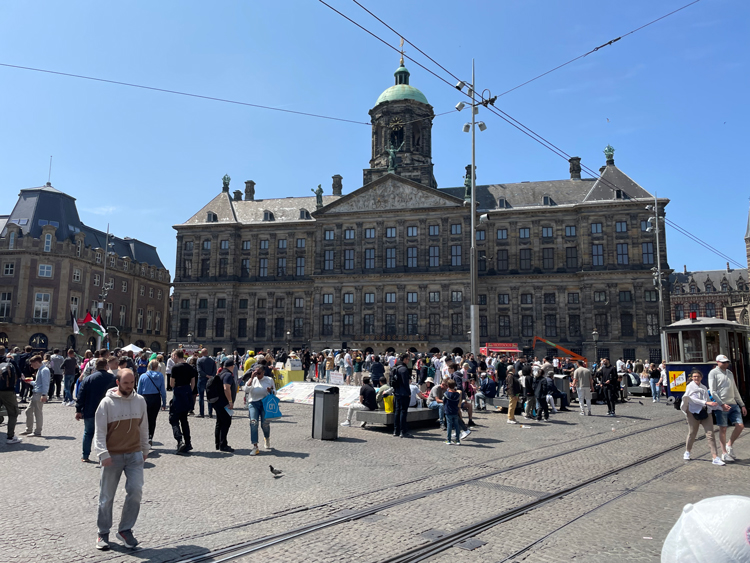
Dam Square is the historic heart of Amsterdam and one of the best-known places in the Netherlands. Right in the centre of the city, it is where Amsterdam’s medieval origins, royal history and modern street life all come together. Most visitors pass through the square sooner or later, but it is much more than a busy meeting point. This is the place where the city began, where major national events still take place, and where some of Amsterdam’s most recognisable buildings stand side by side.
What makes Dam Square special is that it works on several levels at once. It is a landmark, a transport hub, a starting point for exploring the old centre and a place with real historical weight. Stand here for a few minutes and you will see how varied it feels. Tourists pause for photos, shoppers head into the surrounding streets, trams rattle past nearby, and all around you are buildings that tell the story of Amsterdam from the Middle Ages to the present day.
Why Dam Square matters
Dam Square is not just another open space in the city centre. It marks the spot where Amsterdam first took shape. The square gets its name from the original dam that was built across the River Amstel centuries ago. That dam linked the early settlements on either side of the river and helped create the trading town that would grow into Amsterdam. Over time, the dam widened and developed into a square, and that square became the centre of civic, commercial and political life.
That central role has never really disappeared. Even now, Dam Square remains one of the most symbolic places in the country. It is used for national commemorations, public gatherings and official occasions, while also serving as one of the busiest and most recognisable locations in Amsterdam for everyday visitors.
The history of Dam Square
The origins of Dam Square go back to the 13th century, when a dam was built in the River Amstel. The structure controlled the water and created a practical crossing point. It also helped trade, because the area around the dam became a natural place for loading, unloading, buying and selling goods. As Amsterdam expanded, the dam itself became broader and evolved into a square.
During the late medieval period and beyond, the Dam developed into the administrative and commercial heart of the city. Markets were held here, goods were weighed here, and the city’s government was based here. Amsterdam’s old town hall once stood on the square, and after it was destroyed by fire in the 17th century, the building that replaced it would later become the Royal Palace.
Dam Square has also been the backdrop to many defining moments in Dutch history. It has long been a place for public ceremonies, demonstrations, celebration and remembrance. That mix of daily city life and national significance is one of the reasons the square still feels so important today.
What to see on Dam Square
Royal Palace Amsterdam
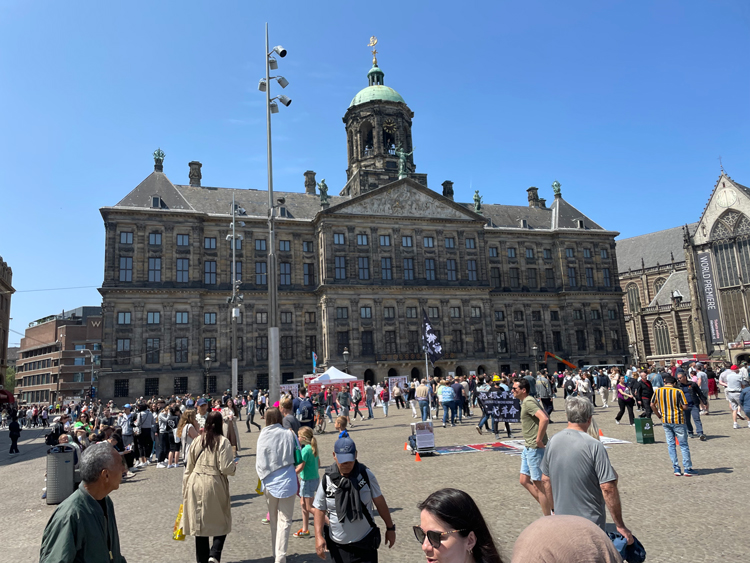
The Royal Palace is the building most people notice first. It dominates the western side of the square and is one of the most impressive examples of classical architecture in Amsterdam. The building was originally designed as the city hall in the 17th century, reflecting the wealth and ambition of Amsterdam during the Dutch Golden Age. Later, it became a royal palace, and today it is still used for official receptions and state occasions.
If the palace is open to visitors during your stay, it is worth going inside. The grand halls, marble interiors and decorative details give you a sense of the scale on which Amsterdam once saw itself. Even if you do not go in, the exterior alone makes it one of the square’s essential sights.
De Nieuwe Kerk
Next to the palace stands De Nieuwe Kerk, or the New Church, although the name is misleading because the building is centuries old. This is one of Amsterdam’s most important historic churches and has long played a national role. Royal inaugurations and other major ceremonies have taken place here, which adds to the sense that Dam Square is not just local but national in character.
Today, De Nieuwe Kerk is best known as a venue for major exhibitions, cultural events and important gatherings. It is worth seeing both for its historic architecture and for whatever is on during your visit. If you are interested in art, photography, Dutch history or the city’s ceremonial traditions, this is one of the strongest stops on the square.
The National Monument
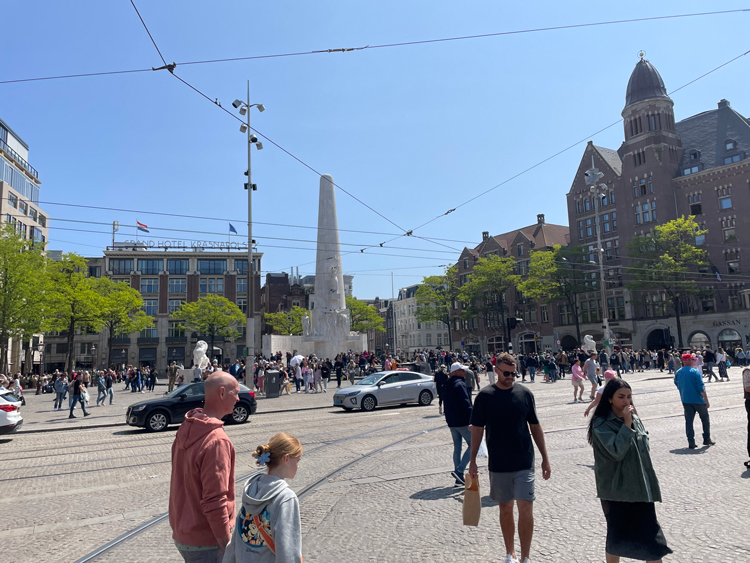
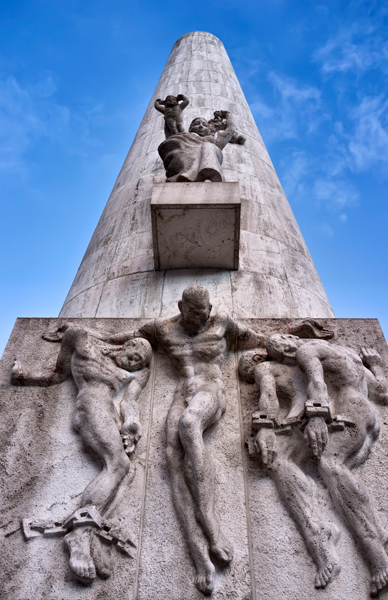
On the opposite side of the square stands the National Monument, the white stone obelisk that has become one of the defining features of the Dam. It was unveiled in the 1950s as a memorial to the victims of the Second World War and later came to represent remembrance of those who have died in war and peacekeeping missions more broadly.
The monument gives Dam Square a more reflective side. This is especially visible during the annual remembrance ceremony on 4 May, when the square becomes the setting for one of the country’s most important moments of public commemoration. At other times, visitors often sit on the steps nearby, but the monument remains a place that carries real symbolic meaning.
What to do around Dam Square
For many travellers, Dam Square works best as a base rather than a place to spend an entire day. You come here to take in the atmosphere, admire the buildings and then branch out into the surrounding streets. From the square, you can walk easily towards Damrak and Amsterdam Central Station, down Rokin, into Kalverstraat for shopping, or towards the older lanes and canals of the city centre.
It is also a good area for people-watching. On a typical day, the square is full of movement. You may come across street performers, musicians and artists, though the atmosphere can shift quickly depending on the season, the weather and what is happening in the city. Because it is such a busy and heavily visited part of Amsterdam, it is wise to keep an eye on your belongings and avoid the usual tourist traps directly on the square.
If you want to combine a visit to Dam Square with a short city-centre walk, a simple route is to start at Amsterdam Central Station, walk down Damrak to the square, then continue into the Nine Streets, the canal belt or the area around Spui. That way, Dam Square becomes the starting point for a broader look at the old city rather than just a quick photo stop.
Shopping near Dam Square
Dam Square is one of the easiest places in Amsterdam to combine sightseeing with shopping. Right on the square you will find De Bijenkorf, the city’s best-known premium department store. It is a useful stop if you want fashion, beauty, gifts or simply a central place to take a break indoors.
Just off the square are two of the city centre’s busiest shopping streets. Kalverstraat is packed with familiar high-street chains, popular fashion brands and beauty stores, while Nieuwendijk offers another long run of mainstream shops stretching towards Central Station. If your aim is convenience, this area is hard to beat. If you prefer smaller boutiques and a more local feel, head away from the square and into the canal-side streets instead.
Kalverstraat is especially useful if you want to combine a city-centre walk with practical shopping, as it links easily with other central neighbourhoods.
Where to eat near Dam Square
The area around Dam Square has no shortage of places to eat, but it helps to choose carefully. The square itself is one of the busiest tourist areas in Amsterdam, which means location is not always a guarantee of quality. In general, it is better to use Dam Square as your reference point and then walk a few minutes into the side streets for something with a bit more character.
You will find everything from quick lunches and coffee bars to brasseries, casual Dutch dining and more polished restaurants within walking distance. The streets around Spui, the edge of the canal belt and parts of the Jordaan offer stronger options if you want a more relaxed meal. If you only need a convenient stop while sightseeing, there are also dependable cafés and department-store dining options nearby.
The best approach is simple: avoid choosing a place purely because it is right on the square, and look a little further out for better value and a calmer atmosphere.
Hotels near Dam Square
Staying near Dam Square puts you in one of the most central locations in Amsterdam. It is especially convenient if you want to explore the historic centre on foot, shop nearby, or be within easy reach of Central Station. The trade-off is that this area is usually busy from morning until late evening, so it suits travellers who value location over quiet surroundings.
There are hotels on and around the square ranging from large luxury addresses to practical city-centre stays. For first-time visitors, the area works well because many of Amsterdam’s best-known sights are within walking distance. For a quieter atmosphere with similar convenience, consider staying a little deeper into the canal belt or towards Jordaan instead.
Practical tips for visiting Dam Square
Dam Square is only a short walk from Amsterdam Central Station, so it is one of the easiest major sights to reach on foot. It also connects naturally with other central areas, which makes it ideal as a first stop if you have just arrived in the city. Early morning is usually the calmest time to see the square, while the middle of the day tends to be the busiest.
Because the area is so central, you do not need to plan around it too much. It fits naturally into almost any Amsterdam itinerary. Visit for the history, the architecture and the atmosphere, then continue on to the canals, museums, shopping streets or nearby neighbourhoods. Even if you only spend half an hour here, you will still have stood in one of the places that shaped Amsterdam from the beginning.
Is Dam Square worth visiting?
Yes, absolutely. Dam Square may be crowded and commercial in places, but it remains one of the few spots in Amsterdam where the city’s origins, monuments and daily energy are all visible at once. It is the historic core of the capital, home to some of its most important buildings, and a natural point of entry into the old centre.
If you want to understand Amsterdam beyond the canals and postcard views, start here. Dam Square tells you where the city began, how it grew, and why this stretch of the centre still matters today.