
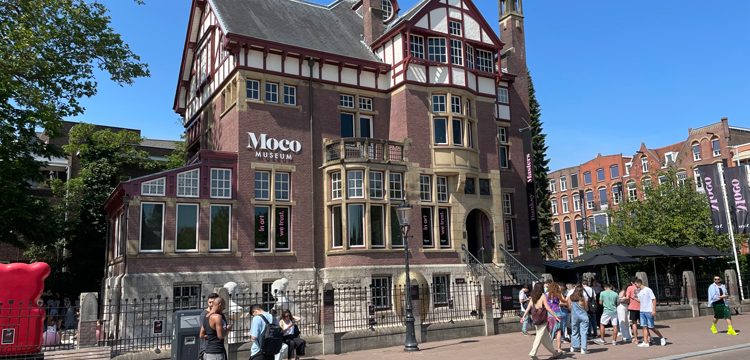
Moco Museum is one of the most talked-about museums on Amsterdam’s Museumplein, and it is easy to see why. Inside a historic townhouse, you step into a world of modern, contemporary and street art that feels far more direct and accessible than many traditional museums. You come here for bold names, strong visuals, immersive rooms and artworks that often say something about power, society, identity and pop culture.
If you are deciding whether Moco Museum is worth visiting, the short answer is yes, especially if you enjoy Banksy, Warhol, Basquiat, Haring or colourful contemporary art that is easy to connect with. The museum is not huge, which is actually part of the appeal. You can see a lot in a relatively short time, without feeling like you need half a day to get through endless galleries.
Check Moco Museum ticket availability
What is Moco Museum in Amsterdam?
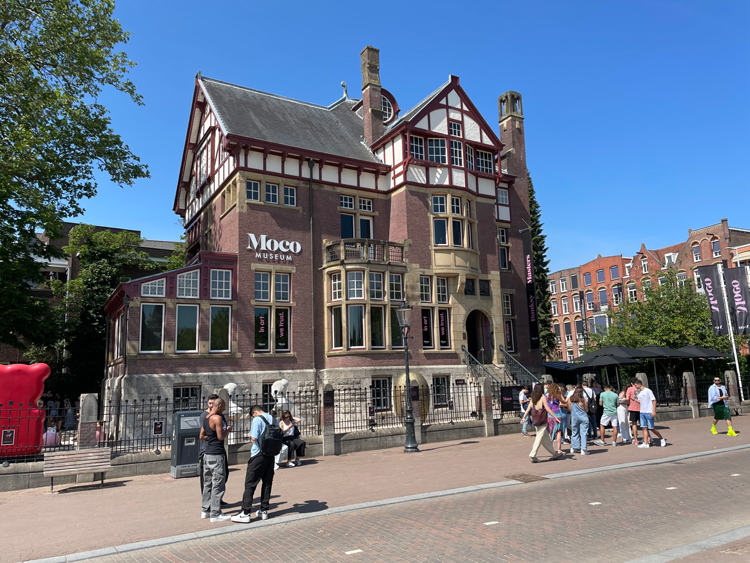
Moco stands for Modern Contemporary Museum. The museum opened in Villa Alsberg, a striking townhouse on Museumplein, between the Rijksmuseum and the Van Gogh Museum. That location makes it an easy stop if you are already planning a cultural day in this part of the city.
What makes Moco different is the tone of the museum. It does not try to feel distant or overly academic. Instead, it focuses on art that grabs your attention straight away. You will see famous names, sharp social commentary, bright colours, playful installations and digital experiences that are designed to make modern art feel approachable. That is exactly why the museum works well both for serious art lovers and for visitors who simply want a museum that feels lively and current.
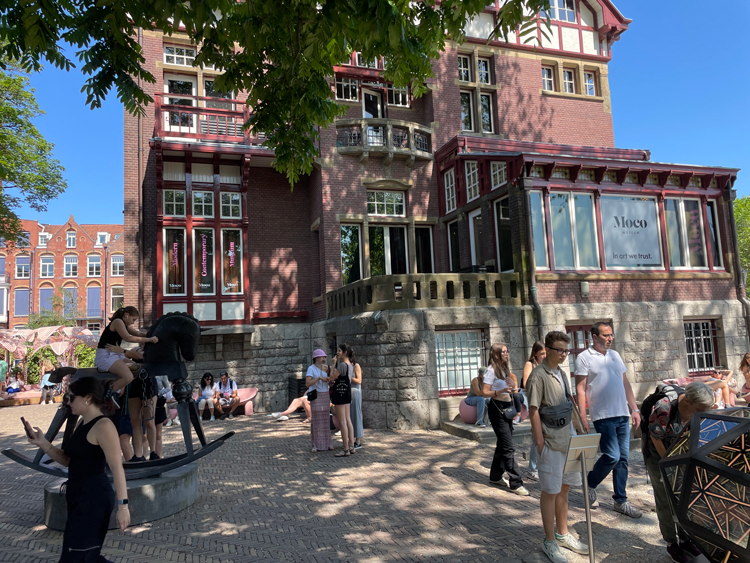
The building itself adds to the experience. Villa Alsberg is a historic house, and the contrast between the elegant rooms and the rebellious, provocative art gives the museum much of its character. It feels more intimate than a large state museum, but that smaller scale also means you can move through the collection at a pleasant pace.
Why people visit Moco Museum
Most visitors come to Moco Museum for one simple reason: it offers a strong line-up of iconic modern and contemporary artists in a setting that feels fresh and easy to enjoy. You do not have to know everything about art history to get something out of it. Many works are instantly recognisable, and even when they are not, the themes are often clear enough to draw you in right away.
The museum is especially popular with people who enjoy street art, pop art and immersive art. It is also a good choice if you usually find large museums a bit overwhelming. At Moco, the experience is more compact, more visual and often more playful. You can still take your time, but it never feels like a heavy or exhausting visit.
Because the museum sits right in the middle of Amsterdam’s museum district, it also fits easily into a wider day out. Many people combine it with a walk across Museumplein, a visit to another museum, or a break in the nearby Vondelpark.
The collection and the kind of art you can expect
Moco Museum is known for showing works by major names in modern and contemporary art, alongside digital and immersive installations. Artists often associated with the museum include Banksy, Andy Warhol, Jean-Michel Basquiat, Keith Haring and Yayoi Kusama. The overall focus is on art that is visually strong but also says something about the world we live in.
That means you can expect themes like consumer culture, fame, rebellion, inequality, identity, activism and humour. Some works are playful on the surface but become sharper when you look more closely. Others are emotional, ironic or deliberately provocative. This mix is one of the reasons Moco appeals to such a broad audience.
The museum also leans into digital and immersive art, which helps break up the traditional gallery rhythm. Instead of only looking at framed works on the wall, you also move through spaces filled with light, reflection, colour and atmosphere. That creates a more dynamic visit and makes the museum especially appealing if you want a cultural activity that still feels energetic.
Banksy at Moco Museum
For many visitors, Banksy is the main reason to book a ticket. Moco Museum has become one of the best-known places in Amsterdam to see Banksy’s work indoors. That matters because his art is so often linked to the street, public walls and temporary interventions. In a museum setting, you get the chance to slow down and look more carefully at the details, the symbols and the layers of satire in his work.
What makes Banksy so compelling is that the images are often immediately readable, but they rarely stay simple for long. He uses humour, contrast and familiar imagery to talk about conflict, authority, surveillance, consumerism and public life. Even if you already know some of the most famous works, seeing them in person tends to have more impact than scrolling past them online.
Moco presents Banksy as part of a broader conversation within modern and contemporary art, rather than as a stand-alone gimmick. That works well, because his themes connect naturally with other artists in the museum who also push back against convention or question how society works.

Modern Masters and immersive art
Although Banksy gets a lot of attention, he is far from the only reason to visit. Moco also brings together a strong mix of modern masters and immersive contemporary works. That combination keeps the museum from feeling one-note. One room may focus on instantly recognisable icons from the late twentieth century, while another invites you into an experience built from light, colour or reflection.
Andy Warhol’s work still feels relevant because of the way it captures celebrity culture, repetition and the power of images. Basquiat brings raw energy, layered symbolism and a voice that still feels urgent. Keith Haring adds movement, rhythm and unmistakable visual language. Together, these artists help shape the backbone of the museum’s identity.
What visitors often enjoy most is the contrast between these iconic names and the more immersive parts of the museum. That shift keeps the visit lively. You are not only looking at art, you are also stepping into environments that change the mood of the rooms and the pace of the experience.
Practical information for your visit
Moco Museum is located at Honthorststraat 20 on Museumplein, one of the easiest cultural areas to reach in Amsterdam. If you are coming from the city centre, the tram is often the most convenient option. This guide on how to use the tram in Amsterdam is useful if you want a simple route to Museumplein without overthinking public transport.
The museum is open daily, and booking online is the smartest option. Timed entry helps manage the flow of visitors, and popular time slots can fill up quickly. If you book through a partner ticket, make sure you also reserve a time slot when needed. A visit usually takes around one to one and a half hours, depending on how long you spend with the works, the immersive rooms and the museum shop.
Because Moco is smaller than some of Amsterdam’s largest museums, it works especially well when you want a strong cultural experience that still leaves room in your day. It is easy to combine with other museums, lunch nearby or a walk around the area. If you are planning a short stay in the city, our guide to Amsterdam in 1 day can help you fit Museumplein into a broader itinerary.
Is Moco Museum worth it?
If you enjoy contemporary art, street art, visual storytelling and museums that do not feel too formal, Moco Museum is absolutely worth adding to your Amsterdam list. It is one of those places that appeals to a wide audience for a reason. You can go in with a deep interest in modern art, but you can also walk in simply curious and still come out feeling inspired.
This is not the museum for people looking for a huge encyclopaedic overview of art history. Amsterdam already has other museums for that. Moco is better seen as a focused, energetic experience built around recognisable names, current themes and art that connects quickly. That is exactly what many visitors are looking for on a city trip.
If you want one museum on Museumplein that feels modern, accessible and a little less traditional, Moco is a very good choice.
Check Moco Museum ticket availability
For more sights and museums, continue to things to see in Amsterdam. Our Amsterdam attraction ticket guide helps you fit timed museum bookings into the rest of your trip.