
If you are planning a walk through the heart of Amsterdam, the Bloemenmarkt is one of those stops that is easy to add to your route and still feels unmistakably Dutch. Set along the Singel canal in the city centre, this famous floating flower market combines postcard views, colourful displays and a steady stream of visitors looking for bulbs, gifts and a slice of Amsterdam atmosphere. It is touristy, busy and often photographed, but that is also part of the charm. For many travellers, it is one of the easiest places to experience the city’s long connection with flowers without leaving the centre.
The Bloemenmarkt is not a huge market where locals do all their flower shopping. It is better seen as a historic attraction with market stalls, floral displays and souvenir shops built on floating platforms along the canal. That setting is what makes it stand out. Even if you have already explored other markets in Amsterdam, this one looks and feels different. The row of stalls on the water, framed by canal houses and central shopping streets, gives it a character that is hard to confuse with anywhere else in the city.
Why the Bloemenmarkt is still worth visiting
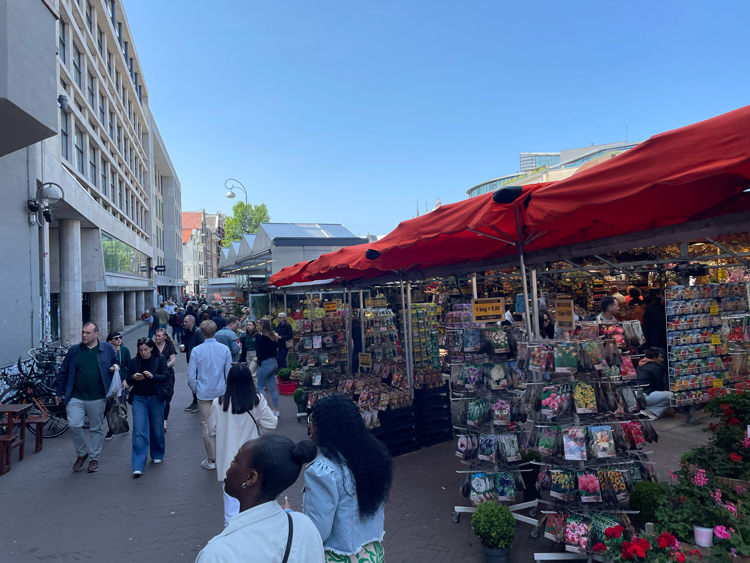
The biggest reason to visit the Bloemenmarkt is not that it is the best place in Amsterdam to buy fresh flowers. It is worth visiting because it is a piece of the city’s history that still survives in a very visible way. The market dates back to the nineteenth century, when traders brought flowers into the city by boat. That connection to the water is still there today in the structure of the market itself. The stalls sit on floating barges, which gives the Bloemenmarkt its famous identity as the world’s best-known floating flower market.
That history makes it more than just a shopping stop. You can easily combine it with a walk through the canal belt, some time around Muntplein and a visit to nearby sights in the old centre. It also works well as a short stop between museums, lunch and shopping. Because it is so central, you do not need to build your whole day around it. You simply pass through, look around, maybe buy a packet of bulbs or a gift, and continue deeper into the city.
Another reason people like it is simple: it looks good. The stalls are packed with bright packaging, bunches of flowers, bulbs, plants and classic Dutch imagery. That makes it one of the most photogenic stretches of the Singel. If you enjoy strolling around Amsterdam with no strict plan, it fits naturally into the kind of day where you wander from canal to canal and stop wherever something catches your eye.
What you can expect when you get there
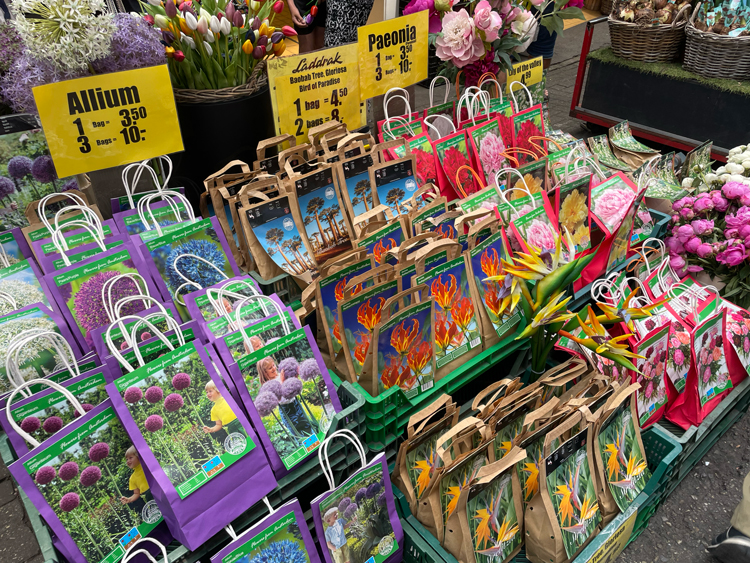
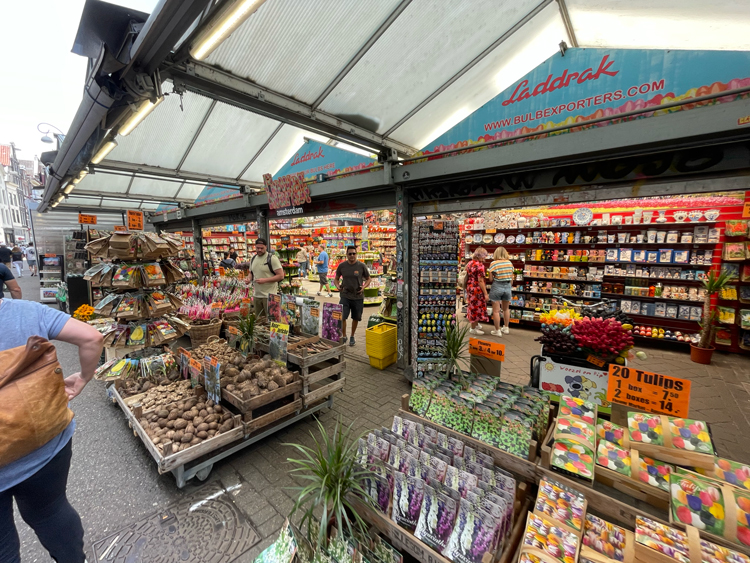
It helps to arrive with the right expectations. The Bloemenmarkt is often described as a flower paradise, but in practice it is a mix of flower stalls, bulb sellers, houseplants, seed packets and plenty of souvenir merchandise. You will still see colourful blooms and seasonal items, but many visitors come away talking just as much about the Dutch gifts as the flowers. Expect tulip bulbs, decorative ceramics, fridge magnets, clogs, cheese-themed products and all kinds of Amsterdam keepsakes alongside the floral displays.
That does not make the visit less enjoyable. It just means the Bloemenmarkt is best appreciated for what it is today: a historic visitor attraction with a floral identity. If you are hoping for a classic local produce market filled only with fresh bouquets, this is not quite that. If you are happy with a lively, central market where flowers and souvenirs sit side by side, you will probably enjoy it much more.
The atmosphere changes through the year. In spring, the flower theme feels especially strong because visitors are already in tulip mode and the city has that fresh-season energy. In summer, the market is lively and packed with visitors exploring the centre. In autumn and winter, it becomes a nice stop during a colder city walk, especially when you want a quick indoor-outdoor browse without needing a full museum visit. December can bring more seasonal items and gifts, which suits the area well.
What to buy at the Bloemenmarkt
The most obvious thing to buy is flower bulbs, especially if you want to take home a classic Amsterdam souvenir that feels a bit more meaningful than a magnet or keyring. Tulip bulbs are the stars, but you will also see other spring-flowering varieties. If you are buying bulbs to take home abroad, check whether the packaging is sealed and prepared for travel. Shops that cater to tourists usually make this very clear, and it is worth choosing that option over loose products if you want less hassle later.
You will also find small gifts that are easy to pack, from postcards and tea towels to Delft-style decorative items. Some stalls have indoor plants and small floral gifts that work well if you are staying nearby and want something simple to brighten up your hotel room or apartment. Prices vary from stall to stall, so it pays to take one slow walk first before buying at the first place you see.
If flowers are your main reason for visiting Amsterdam, the Bloemenmarkt can also be a nice starting point for a wider flower-themed trip. In spring, many visitors combine a city stay with a day trip to Keukenhof. That gives you the contrast between Amsterdam’s famous flower market in the centre and the large-scale bulb fields and gardens outside the city.
Opening hours and practical tips
The Bloemenmarkt is generally open every day. On most days it opens in the morning, while Sunday usually starts later. Because it sits right in the centre, it is easy to reach on foot from places like Dam Square, the Nine Streets, the Kalverstraat shopping area and the southern edge of the canal belt. If you are using public transport, the easiest advice is not to memorise tram numbers but to aim for the area around Koningsplein or Muntplein and walk the final stretch.
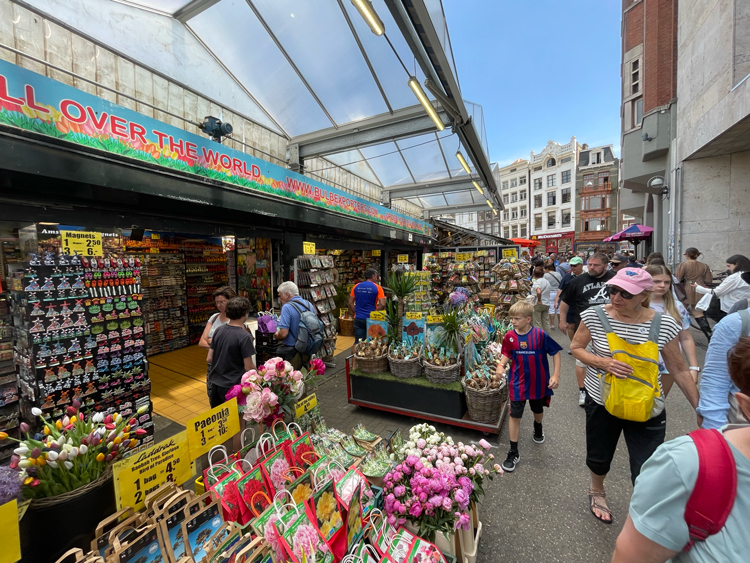
The best time to go is early in the day if you want more space and better photos. By late morning and afternoon, especially on weekends and during the high season, the path along the stalls can get crowded. That does not ruin the experience, but it does make it less relaxed. If you want to browse properly, take photos and compare what different stalls sell, go as early as you reasonably can.
Because the market is in the middle of a busy part of Amsterdam, driving there is not a great idea unless you already know the city well and have parking arranged elsewhere. Walking, public transport and cycling to the general area make much more sense. Once you are there, the Bloemenmarkt itself is easy to visit in half an hour, though many people linger longer because the setting is so central and pleasant for a canal-side stroll.
What to do near the Bloemenmarkt
One of the best things about visiting the Bloemenmarkt is how easy it is to combine with other classic Amsterdam experiences. A walk along the Singel naturally leads into the wider canal belt, so this is a good moment to explore more of the city’s historic waterways. If you want to understand why this part of Amsterdam is so loved, read more about the canals of Amsterdam and then continue your walk with fresh eyes.
You are also in a great area for shopping, cafés and aimless wandering. Head towards Spui for bookshops and hidden corners, or continue west into the canal district for quieter streets and elegant facades. If you want to see Amsterdam from the water after visiting a market that floats on it, this is the perfect place in your day to book a canal cruise. Seeing the city from the water adds a completely different perspective and pairs nicely with a stop at the Bloemenmarkt.
The market also works well as a short stop between larger attractions. It is easy to fit in before a museum visit, after lunch or as part of an afternoon wandering route through the city centre. That flexibility is one of the main reasons it remains such a popular suggestion for first-time visitors.
Is the Bloemenmarkt worth it?
Yes, as long as you visit for the right reasons. The Bloemenmarkt is worth it for the setting, the history, the atmosphere and the ease with which it fits into a day in central Amsterdam. It is not the most authentic local shopping market in the city, and it is not the quietest place either. But it remains one of Amsterdam’s best-known sights for a reason. It is visually distinctive, deeply tied to the city’s image and simple to enjoy without needing much planning.
If you like flowers, canal views, classic Dutch souvenirs and central city walks, the Bloemenmarkt is an easy yes. Go early, keep your expectations realistic and treat it as a lively historic stop rather than a hidden gem. That way, you will get exactly what the Bloemenmarkt does best: a colourful, memorable slice of Amsterdam right on the water.
The Bloemenmarkt may be famous, busy and a little touristy, but it still earns its place on an Amsterdam itinerary. For many travellers, it is one of those stops that brings together the city’s canals, history and visual charm in one simple walk. And in a city full of beautiful streets, that is more than enough reason to go.